
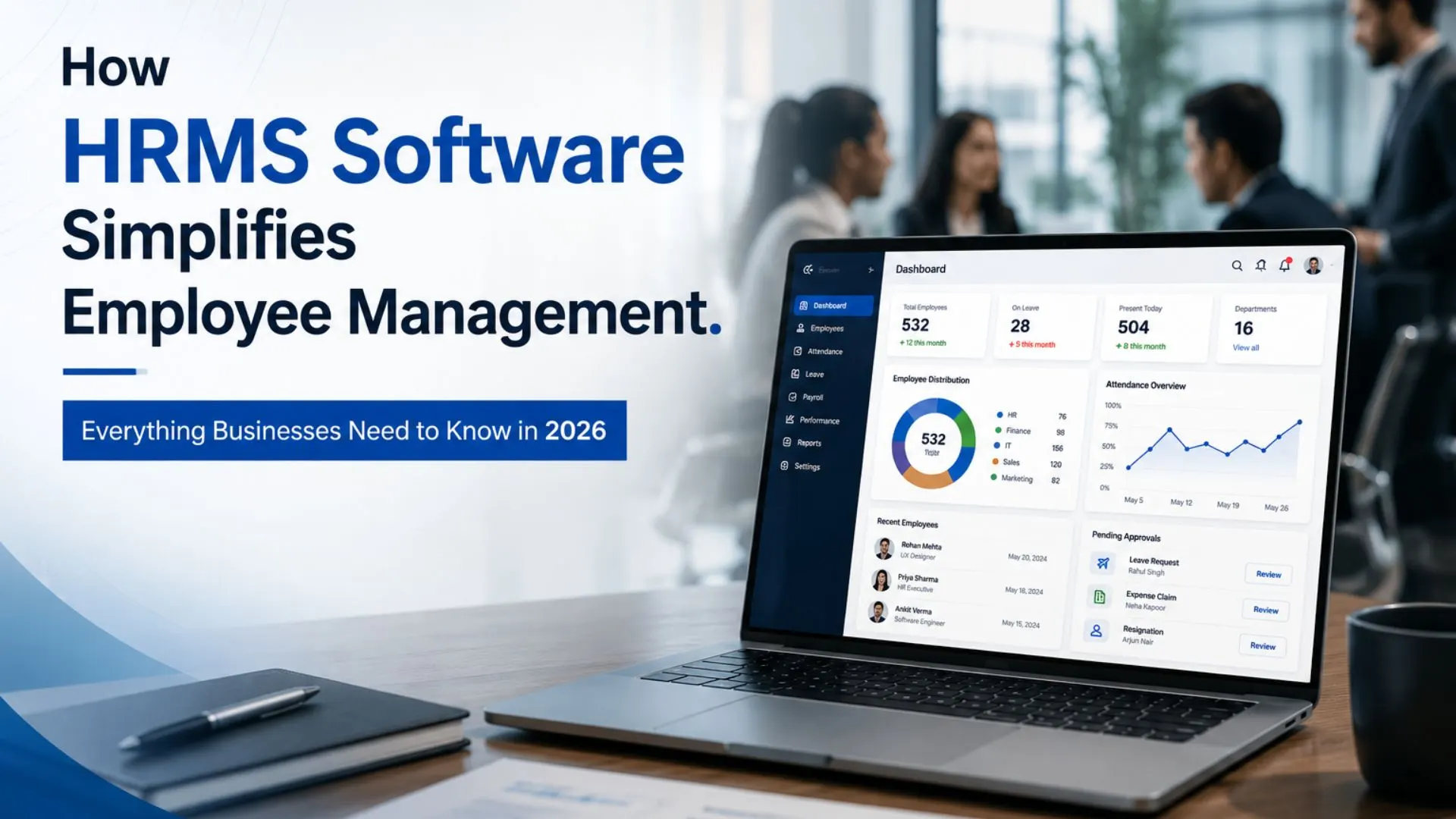
I know that managing people is no longer a back‑office chore. In 2027, the way you hire, pay, develop, and keep employees directly shapes your competitiveness. A Human Resource Management System,m or HRMS, sits at the heart of that effort. With hundreds of platforms available, choosing the right HRMS can feel overwhelming. This guide shows you what to look for, what to avoid, and how to decide with confidence.
What Is an HRMS and Why Does It Matter?
An HRMS is a software platform that brings together HR functions: employee records, payroll, attendance, leave, recruitment, performance management, and compliance. Instead of juggling spreadsheets, emails, and disconnected tools, your HR team works from one source of truth.
The benefits are clear. Companies that use an implemented HRMS usually cut work, reduce payroll mistakes, improve the employee experience,e and gain real‑time visibility into workforce data. As remote and hybrid work become permanent, a reliable HRMS is no longer optional for growing businesses.
Step 1: Define Your Business Needs First
Before watching a demo, document what you actually need. Start by answering a question:
- How many employees do you have today, and how many do you expect in three years?
- Which HR processes cause the delays or errors now?
- Do you operate across multiple locations, states, or countries?
- Which other systems (accounting, ERP, devices) must integrate with your HRMS?
Involve stakeholders from HR, finance, IT, and operations. Their input builds a requirements checklist. Prevents you from paying for features you will never use.
Step 2: Prioritize Must-Have HRMS Features
Not every feature carries weight. Focus on the capabilities that deliver the value.
- Core: Employee database. A secure, searchable repository for employee data, documents,s and the organizational structure is the foundation of every HRMS.
- Compliance: Look for automated salary calculations, tax deductions, statutory contributions, ns and payslip generation. Software that updates automatically as labor laws change saves a lot of time. Reduces risk.
- Leave management: Features such as geo‑fenced check‑ins, shift scheduling, integration, and customizable leave policies are essential for distributed teams.
- Onboarding: An applicant tracking system, digital offer letters, and automated onboarding workflows help new hires become productive faster.
- Performance management: Goal setting, feedback, appraisal cycles,s and 360‑degree reviews support a culture of growth.
- Employee self‑service: Portals and mobile apps let employees view payslips, apply for leave, ve and update details without contacting HR, freeing your team for work.
Step 3: Look for AI and Analytics Capabilities
In 2027, intelligent automation is an expectation, not a luxury. Modern HRMS platforms use AI to screen resumes, answer employee questions through chatbots, flag attendance anomalies,ies and predict attrition risk.
Analytics is equally important. Dashboards that track headcount, turnover, absenteeism, and cost per hire let leaders make decisions based on evidence, not instinct.
When evaluating vendors, ask to see reporting examples, not polished slides.
Step 4: Evaluate Scalability and Integration
The system you choose should grow with you. Ask vendors how their pricing and performance change as you add employees, modules, or locations.
A platform that works for 50 people may struggle at 500.
Integration is just as critical. Your HRMS should connect smoothly with accounting software, communication tools, job portals,s and biometric devices through APIs.
Poor integration creates data silos and manual rework, which defeats the purpose of automation.
Step 5: Prioritize Security and Data Privacy
HR data is among the information your company holds.
Verify that any vendor offers:
- Role‑based access controls
- End‑to‑end encryption
- Regular security audits and certifications such as ISO 27001 or SOC 2
- Compliance with data protection laws in your region
- Clear data backup and disaster recovery policies
Never compromise on security for the sake of pricing.
Step 6: Choose Between Cloud and On‑Premise Deployment
Many businesses today choose cloud HRMS because the initial cost is lower, updates happen automatically, you can work from anywhere, and it is set up quickly. On‑premise HRMS might still fit companies that need data to stay in a country or that want a very custom system. On‑premise HRMS needs IT staff and more upkeep. Look at your budget and your IT skills. The rules you must follow before you make a choice.
Step 7: Assess User Experience and Support
Even the most powerful HRMS will not work if workers find it hard to use. Give priority to an interface, an app that works well, and support in many languages if your staff comes from many backgrounds. During demos, let real HR people and a few staff members try the system.
Vendor support is also very important. Look at how long implementation takes, what training is offered, the service level agreement, and what other customers say. A quick support team can turn a launch into a month of trouble or vice versa.
Step 8: Understand the True Cost
Pricing plans differ a lot. Some charge per employee each month, others have tiers, and some charge for each module. Look past the list price and ask about the following: fees for moving data and setting up; costs for training and making the system fit your needs; extra charges for modules or connections; how long the contract is. What the renewal terms are.
Adding up the cost that you will pay in three to five years gives a picture when you compare vendors.
Step 9: Run a Pilot Before Committing
Pick two or three vendors and ask for a trial or pilot using data. This real‑world test shows problems with how easy it’s to use, gaps in integration and the level of support that demos rarely show. Gather feedback from the people who test and give each platform a score based on your checklist of needs.
Final Thoughts
Picking the HRMS in 2027 is about thinking, careful checking, and long‑term plans. Begin with what your business needs, focus on features that fix problems, demand security, and test before you decide to buy. The correct HRMS will not only make HR work smoother; it will also boost employee engagement. Help the company grow steadily.
Take your time, bring in the people, and choose a system that will serve your organization for years.