
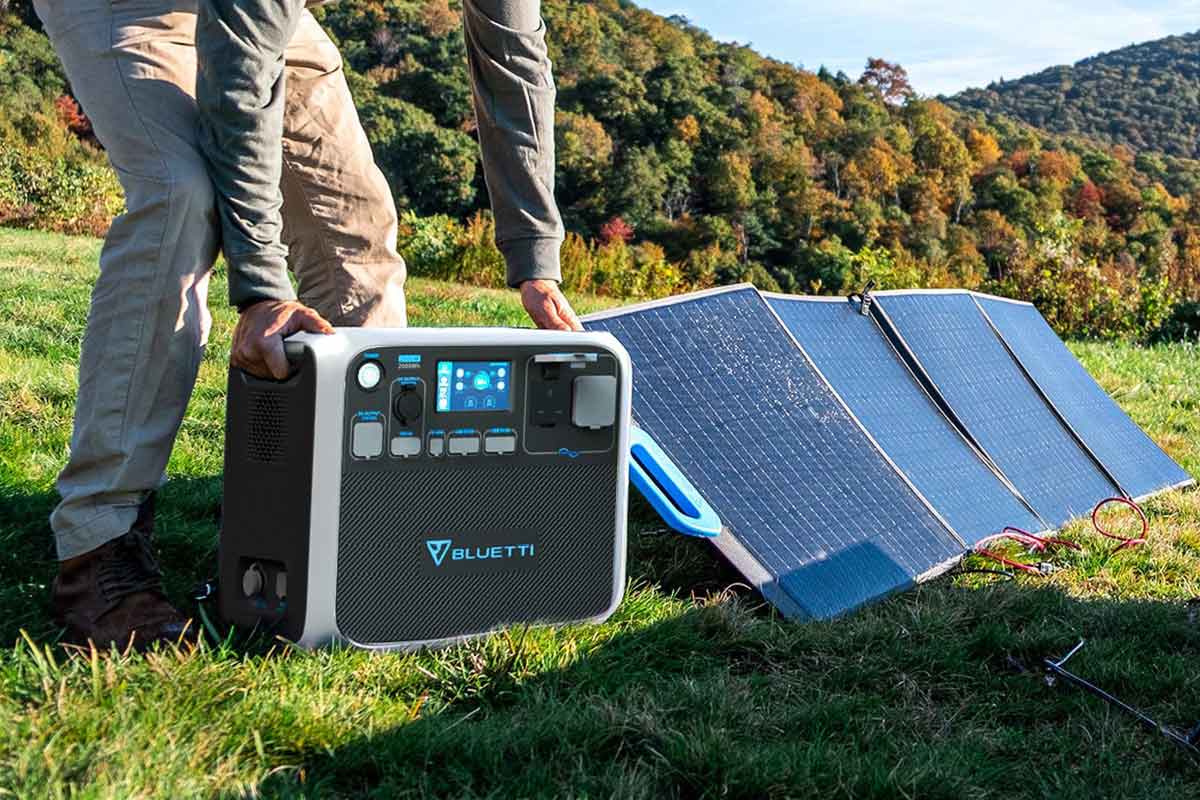
Two products can be considered when selecting a power bank to carry on a trip, camp, or use as a backup generator, and they are: portable solar battery banks and regular power banks. Conventional power banks make use of pre-charged batteries and have to be plugged into the grid. Contrary to this, the solar battery banks are portable, which do not need electricity sources, but rather rely on sunlight to generate power as a renewable resource. Both have advantages and disadvantages, which affect the way of charging and device compatibility. Learning these differences will enable you to make decisions on which alternative is most suitable to your lifestyle and power requirements in different situations. The working principle of Portable Solar Battery Banks and Power Banks.
Types of Energy Storage and Charging
Portable solar battery banks convert solar energy to electricity, which is stored in an internal battery that can be used later. Such a conversion process allows users to utilize renewable energy in the most effective manner, which is particularly important with a solar power bank in an outdoor or off-grid setting. The lithium-ion batteries are equipped with traditional power banks that save the energy stored in a power outlet and can be used to give a quick charge to other devices. Both of them have similar methods of accessing stored energy: a direct connection of the devices to the battery bank. Whereas solar banks depend on access to sunlight, conventional banks need to be connected to the grid to get charged.
Outputs, Ports, and Device Compatibility
The amount of power that a model can produce differs depending on the model, which affects the speed and the number of devices that can be charged at once. The two usually have USB ports and support various electronics, including smartphones and tablets. The high-output models are made sure so as to have a quicker charging time. Banks of solar batteries can provide special compatibility with low-power devices that can be used in an off-grid environment. Meanwhile, conventional power banks may have increased output, which is convenient in tethered operations without any restrictions on the environment.
Application of Solar Panels on Battery Banks
The combination of battery banks with solar panels can provide an autonomous power supply on an off-grid basis. The solar panels transform solar energy into electricity, and this is stored in the battery of the bank. These panels can be placed in ideal locations of the sun as permanent or portable systems by the user. The efficiency of the system relies on the amount of solar exposure and the conditions of the environment, whereby it is important to ensure appropriate sizes and arrangements of panels to be used to depend on energy harvesting. The knowledge of solar technology integration can be used to provide a better user experience in the process of picking solar banks.
Differences in Performance on the Field
Speed, Capacity, and Runtime Comparison Charging
Conventional power banks are usually characterised by higher capacities, in order to have maximum charging speed and run time. Internal systems are efficient, hence they recharge several items in a short period of time. On the contrary, solar battery banks may not provide a rapid charging rate unless they are supplemented by sufficient sunlight,t and need to plan for higher utilization. There is a big difference in the capacities of models and brands, and solar options are suitable during long outdoor trips. The comparison of the models with regard to the runtime is necessary in order to fulfill certain power requirements in everyday life.
Power self-sufficiency and solar recharging
Solar banks are more effective in off-grid settings, which offer sustainable solutions to outdoor athletes and field employees. Their ability to recharge batteries using the power of sunlight alone. makes good use of the operation extended beyond the conventional limits. Nevertheless, such dependency on solar recharging has to be implemented with an efficient placement and might be influenced by weather conditions. The traditional type of power banks can be used by users in the urban setting, where immediate charging is offered without dependence on the environment. Both systems are offering a critical off-grid solution, and all these are considered differently.
Productivity, conversion loss, and utilization
Energy conversion loss is the variation in the efficiency of solar panels and storage systems in the solar battery banks. This makes the general efficiency lower than that of n grid-charged power banks, where there is no deficit of energy being converted. In spite of these difficulties, solar alternatives are bright in the commonplace outdoor applications, which make use of a great amount of solar radiation to generate continuous power. Evaluation of efficiency and situations of daily use aids in determining viable decisions. The users have to take into consideration the losses of energy and the advantages of renewable use.
Which to Select for your Needs?
Selecting Travel Style and Power Demand
Before buying a power bank, determine your traveling habits and power requirements. Conventional banks are better in expedited, urban journeys and peak demand. They provide fast and steady power connectivity with no concern about the environment. On the other hand, solar banks offer a separate solution of adventure travel, remote work, or natural environments and are concerned with sustainable energy harvesting. The frequency, duration, and place of locations should be considered to select a suitable device that should be chosen with a good level of reliability, depending on the needs.
In Cases where Solar Panel Battery Banks are More Valuable
Solar banks are more favored in cases when access to the grid is restricted or when environmental sustainability is a consideration. The fact that they do not need electrical plugs when camping, hiking, and extended fieldwork is inimitable. Solar banks become useful to users who are interested in environmentally friendly technologies and renewable energy. Assess the use of the technology depending on the outdoor activities, possible exposure to sunlight, and long-term power demands to realize the maximum potential of the solar bank.
Conclusion
The decision between using portable solar battery banks and regular power banks implies the evaluation of personal needs and power efficiency. Traditional banks provide fast and trustworthy fees, particularly applicable in an urban environment or in a high-traffic context. In the meantime, solar battery banks will be sustainable and independent even in off-grid conditions, which will increase their attractiveness in outdoor activities. They both have special features that will meet different lifestyles and power needs. Mainstream attention to these factors guarantees users a power bank that corresponds to their needs and places perfectly.