
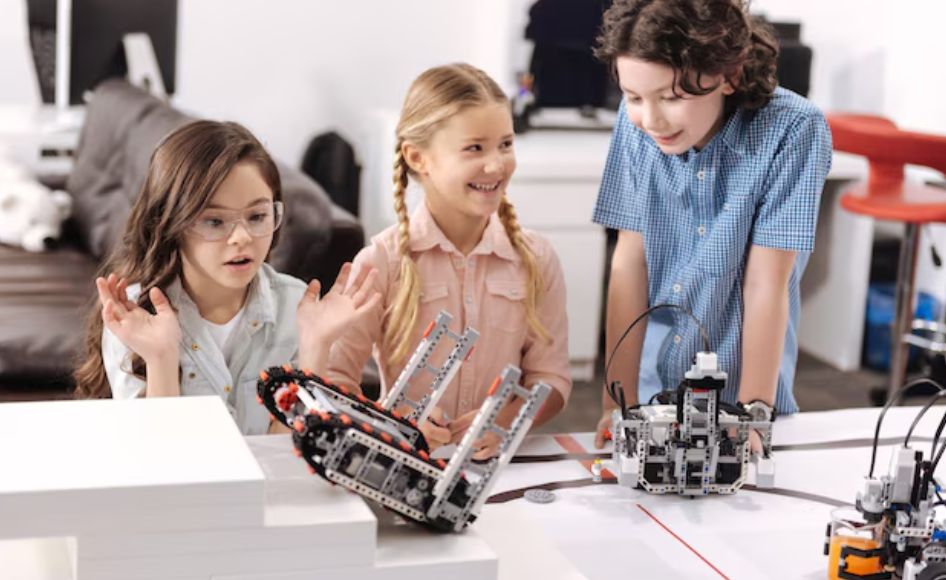
STEM education helps students develop skills that are useful for careers in science, technology, engineering, and mathematics. As technology continues to grow, students need more than theoretical knowledge. They also need practical experience, creativity, and problem-solving abilities. Robotic products provide an engaging way for students to explore technology and understand how different systems work. By using robotics in education, students can gain valuable skills that support their academic development and future career goals.
Building Practical Skills with Robotic Products
Students can learn many technical skills by working directly with robotic products. They can build simple machines, connect components, use sensors, and create basic programs to control different functions. These activities help students understand how technology works in real situations.
Instead of only reading about programming or engineering concepts, students can apply what they learn through practical projects. This hands-on approach can make difficult subjects easier to understand and encourage students to become more interested in STEM subjects.
Improving Problem-Solving Skills
Problem-solving is an important part of almost every STEM career. Engineers, programmers, scientists, and technicians regularly face challenges that require careful thinking and testing. Robotics projects give students opportunities to practice these skills in an enjoyable learning environment.
When a robotic product does not work as expected, students must investigate the problem and find a suitable solution. They may need to change the programming, adjust a component, or redesign part of their project. This process teaches them to remain patient, analyze problems, and learn from mistakes.
Encouraging Creativity and Innovation
Future STEM professionals need to think creatively when developing new ideas and solutions. Robotic products encourage students to experiment and create projects based on their own ideas. They can design robots that perform different tasks or find new ways to improve an existing design.
This creative process helps students understand that there can be several solutions to the same problem. It also gives them confidence to test new ideas and develop innovative approaches to technical challenges.
Developing Teamwork and Communication
Many STEM careers involve working with other professionals. Robotics projects can help students develop teamwork and communication skills from an early age. When students work together, they learn how to divide tasks, share ideas, discuss problems, and make decisions as a group.
These experiences prepare students for professional environments where successful projects often depend on cooperation between engineers, developers, designers, researchers, and other team members.
Preparing for Technology-Based Careers
Technology is becoming an important part of many modern careers. Students who gain early experience with robotics can become more comfortable with programming, automation, electronics, and engineering concepts.
Their experience with robotic products may also encourage them to explore careers such as robotics engineering, software development, mechanical engineering, electrical engineering, and other technology-related fields. The skills they develop can remain useful even if they eventually choose a different STEM career.
Conclusion
Robotic products give students a practical and engaging way to prepare for the future. They help develop technical knowledge, creativity, problem-solving abilities, teamwork, and confidence. By allowing students to build, program, test, and improve robotic projects, robotics education can create a strong foundation for future STEM careers and help students become adaptable professionals in a technology-driven world.