
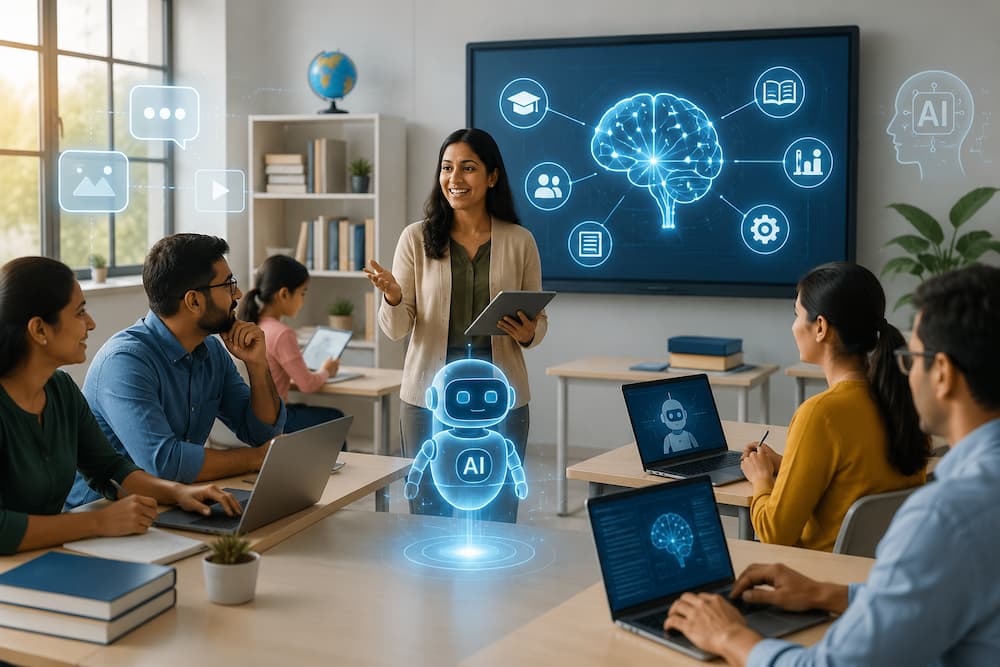
Technology has fundamentally transformed nearly every facet of contemporary existence, and the realm of education is not immune to this evolution.
Conventional pedagogical approaches are now increasingly augmented by digital instruments that render learning more interactive, accessible, and captivating.These modern educational devices empower students to grasp intricate concepts, cultivate robust study habits, and acquire the vital competencies required for future success.
Ranging from tablets, smartboards, and digital pens to laptops and virtual reality headsets, educational technology is forging novel pathways for both students and educators.
These tools facilitate streamlined access to instructional materials, enhance collaborative project work, and enable the exploration of academic disciplines through immersive, interactive engagements.
With the rapid expansion of digital education in 2026, educational gadgets have emerged as indispensable instruments across classrooms, universities, and home-learning settings.
A comprehensive grasp of their distinct advantages and multifaceted applications illuminates the profound manner in which technology is reshaping the trajectory of future pedagogy.
What Are Educational Gadgets?
Educational gadgets encompass a spectrum of electronic devices and technological instruments engineered to facilitate teaching, learning, research, and broader academic endeavors.
These tools empower students to retrieve information, execute assignments, engage in communication with instructors, and cultivate practical expertise.
Such devices are equally applicable within traditional classroom settings, virtual learning platforms, library archives, and private study areas.
Some popular educational gadgets include:
- Tablets and touchscreen devices
- Laptops and Chromebooks
- Smartboards and interactive displays
- Digital pens and smart notebooks
- E-readers and electronic dictionaries
- Educational robots and coding kits
- Virtual reality and augmented reality headsets
- Noise-cancelling headphones
Every device presents a distinct set of capabilities designed to enhance the holistic learning experience.
How Modern Educational Gadgets Are Changing Learning
Educational technology is forging novel pathways for students to grasp information and engage in academic pursuits.
Moving away from a sole reliance on printed textbooks and conventional lectures, learners can now leverage interactive digital resources.
1. Making Learning More Interactive
Interactive educational devices foster active student engagement within the classroom.
Through the utilization of smartboards, tablets, and touchscreen displays, instructors can effectively deliver multimedia content, including videos, diagrams, presentations, and interactive learning activities.
By engaging with digital content, students can move beyond passive listening to active exploration, a shift that not only demystifies complex subject matter but also fosters heightened classroom engagement.
2. Improving Access to Educational Resources
A paramount benefit of contemporary educational technology lies in its facilitation of seamless information access.
Learners leverage laptops, tablets, and e-readers to delve into digital repositories, virtual curricula, scholarly articles, and educational platforms.
Such accessibility empowers learners to explore diverse subjects extending well beyond conventional classroom curricula, while simultaneously enabling students to locate supplementary clarifications whenever they encounter difficulties with complex material.
3. Supporting Personalized Learning
Given that each student possesses a unique learning style, pace, and academic need, educational applications and intelligent devices are capable of facilitating tailored learning experiences.
Certain educational platforms facilitate skill acquisition by offering practice exercises, monitoring learner progress, and delivering adaptive recommendations tailored to individual student performance.
Such adaptability enables learners to dedicate greater attention to challenging disciplines while advancing through well-recognized material at a tempo that suits their individual needs.
4. Encouraging Collaboration and Communication
Contemporary technological devices have significantly streamlined the exchange of information between students and instructors.
Through the utilization of laptops, tablets, and collaborative platforms, learners are now able to facilitate document sharing, engage in group initiatives, and conduct discussions regarding their assignments with unprecedented ease.
Furthermore, digital classrooms facilitate seamless interaction among students enrolled at disparate geographic locations.
Such instruments are instrumental in cultivating collaborative synergy, enhancing communicative efficacy, and refining problem-solving acumen.
Top Educational Gadgets Transforming Modern Education
A myriad of cutting-edge instruments is exerting a pivotal influence within both contemporary educational settings and individual study spheres.
Smart Tablets
Smart tablets stand out as premier educational instruments due to their seamless integration of portability with robust learning capabilities.
Leveraging tablets, students have the capacity to access digital textbooks, view educational videos, record notes, participate in virtual lectures, and submit coursework.
Their touchscreen interfaces also make interactive educational applications easier to use.
Laptops and Chromebooks
For students engaged in the rigorous demands of academic inquiry, laptops serve as indispensable instruments for conducting research, crafting presentations, composing assignments, and participating in virtual coursework.
Chromebooks prove exceptionally advantageous within educational settings that rely heavily on web-based applications and cloud infrastructure.
Such apparatuses simultaneously foster the cultivation of digital competencies essential for success in advanced academic pursuits and future professional endeavors.
Smartboards
Interactive smartboards are fundamentally transforming pedagogical delivery by enabling educators to project multimedia content, annotate instructional materials, and actively engage students in classroom activities.
Educators can elucidate intricate subjects by leveraging visual aids, such as interactive diagrams and presentations.
Digital Pens and Smart Notebooks
Digital pens and smart notebooks help students combine traditional handwriting with digital organization. These tools facilitate comprehensive note-taking, sketching, diagramming, and document management.
Contingent upon the specific apparatus employed, handwritten annotations may be transformed into searchable digital documents.
Virtual Reality Headsets
Virtual reality technology facilitates immersive educational engagements, enabling students to navigate simulated environments, traverse historical sites, and investigate scientific principles through interactive virtual simulations.
Consequently, students may delve into the intricacies of the solar system, dissect the complexities of human anatomy, or scrutinize diverse geographical landscapes by leveraging interactive simulations.
Educational Robots and Coding Kits
Robotics kits and coding gadgets serve as instrumental gateways for students to engage with programming, engineering, and the cultivation of logical reasoning.
Engaging students in the construction and command of rudimentary robotic systems fosters critical problem-solving competencies while illuminating the underlying mechanics of technological functionality.
Such instruments prove especially efficacious for the pedagogical integration of scientific, technological, engineering, and mathematical principles.
Major Benefits of Educational Gadgets for Students
When deployed judiciously, educational gadgets offer a multitude of distinct benefits.
Better Productivity
Digital devices facilitate the centralization of academic responsibilities, enabling students to coordinate assignments, construct schedules, curate notes, and retrieve study resources from a unified platform.
Such integrative capabilities significantly enhance the organization of scholarly endeavors.
Improved Understanding
Videos, simulations, animations, and interactive exercises possess the unique capacity to elucidate intricate concepts with a depth and clarity that traditional text-based resources often fail to achieve in isolation.
Greater Learning Flexibility
Access to digital lessons and educational materials is contingent upon the student’s location, as well as the prevailing internet connectivity and specific technical prerequisites of the platform.
Development of Digital Skills
The integration of educational gadgets facilitates student acclimatization to digital communication platforms, research instruments, productivity software, and fundamental technical competencies.
Increased Student Engagement
Interactive learning activities enhance the engagement of lessons by stimulating active student participation.
The Role of Artificial Intelligence in Educational Gadgets
The advent of artificial intelligence is reshaping the landscape of educational technology, offering unprecedented capabilities.
Digital platforms driven by AI are also changing how educational companies advertize their services and engage with students. With AI-powered social media management, SEO content production, email marketing, and advertising automation, tools like Androva assist companies in streamlining their marketing operations. These solutions can help companies in the education sector reach a larger audience and enhance their online visibility.
Certain educational platforms additionally furnish personalized recommendations, tailored to individual learning trajectories.
Educators may leverage AI-enhanced instruments to craft instructional resources, structure evaluations, and discern trends within student achievement data.
Nonetheless, artificial intelligence ought to serve as a facilitator rather than a substitute for educators, for human mentorship, the cultivation of critical reasoning, creative faculties, and substantive interpersonal engagement within the classroom constitute indispensable components of a truly effective educational framework.
Challenges of Using Educational Gadgets
While educational devices offer substantial advantages, their deployment simultaneously engenders specific challenges.
The prohibitive expense of digital devices can effectively bar students from economically disadvantaged backgrounds from accessing essential educational technology.
Furthermore, the successful execution of numerous digital learning initiatives relies critically on the availability of dependable internet connectivity and consistent technical support.
Prolonged engagement with digital screens can precipitate ocular fatigue, diminish physical exertion, and divert attention from academic pursuits.
Furthermore, learners utilizing online educational infrastructure may be exposed to significant vulnerabilities regarding data privacy and cybersecurity threats.
Educational institutions and guardians must collaboratively cultivate robust technological habits, curate applications suitable for specific developmental stages, and foster a regime of balanced academic engagement.
Future Trends in Educational Technology
The trajectory of educational development points toward a synergistic integration of conventional pedagogical approaches with cutting-edge digital technologies.
The convergence of artificial intelligence, augmented and virtual reality, wearable learning technologies, and smart classroom infrastructures is poised to cultivate educational ecosystems that are markedly more flexible and interactive.
Cloud-based learning platforms will persist in facilitating collaborative efforts and ensuring equitable access to educational resources, while concurrently, robotics and practical technology kits stand to empower students to cultivate technical proficiency through experiential, hands-on engagement.
Consequently, educational institutions are poised to place greater emphasis on digital accessibility, the safeguarding of data, and the ethical utilization of technology.
Such advancements foster educational settings that more effectively equip learners with the competencies necessary to navigate forthcoming academic and professional landscapes.
Conclusion
Contemporary educational technologies are reshaping the trajectory of learning by fostering environments that are significantly more interactive, adaptable, and inclusive.
Instruments ranging from tablets, laptops, and smartboards to digital pens, virtual reality headsets, and educational robots are now empowering students to investigate novel concepts and cultivate essential competencies.
Furthermore, these technologies empower educators by furnishing novel modalities for lesson delivery, fostering collaborative engagement, and streamlining the organization of pedagogical initiatives.
While significant hurdles regarding device expenditure, excessive screen exposure, connectivity availability, and data integrity demand rigorous attention, the judicious application of technology can transform educational tools into indispensable assets for learning.
As innovation progresses throughout 2026 and the years that follow, the synergistic integration of pedagogically sound methodologies with contemporary educational technologies will be paramount in cultivating learning environments that are not only engaging and inclusive but also adequately prepared for future demands.